
Views: 0 Author: Site Editor Publish Time: 2026-09-30 Origin: Site


Equipment downtime drains your maintenance budget and creates severe workplace hazards. How long will your lifting gear actually last? Facility managers and procurement officers need hard, reliable data before investing capital in a new Electric Chain Hoist. While a premium unit generally operates for a decade or two, its true longevity is measured in actual motor run time rather than calendar days. In this comprehensive guide, we explore the exact mechanical factors dictating equipment survival. We will also cover essential maintenance protocols and definitive signs that dictate an immediate structural upgrade.
Key Takeaways
Average Lifespan: High-grade lifting machinery typically lasts 10 to 20 years. However, industrial standards measure true lifespan in Safe Working Periods, translating to roughly 1,600 to 3,200 hours of actual motor run time.
Usage Matters: The longevity of your equipment heavily depends on its duty cycle and strict adherence to its designated weight capacity limits.
Maintenance is Key: Routine lubrication, strict daily visual inspections, and prompt component repairs can extend the operational life of your system by several years.
Replacement Triggers: Frequent motor breakdowns, structural metal fatigue, and failing safety features indicate that replacing the unit is a safer and more economical choice than continued patchwork repairs.
Analyzing recent industrial procurement trends reveals a massive shift in how facilities manage their lifting assets. Modern manufacturing plants are rapidly abandoning the traditional run-to-failure model. Today, industry leaders leverage automated duty cycle tracking and thermal sensors to monitor exact motor hours. This data-driven approach highlights a critical truth. Actual durability is strictly tied to mechanical wear and tear. Therefore, evaluating industrial lifting equipment purely by calendar years yields an incomplete and often dangerous picture.
Measuring lifespan purely by years can be highly misleading for facility managers. Consider a unit utilized once a week for light maintenance tasks in a pristine clean room. This equipment will easily outlast machinery running continuous heavy shifts on a dusty automotive assembly line. For this reason, professional engineers measure lifespan in actual lifting hours. A system that lasts 15 years in a low-demand environment might reach the end of its mechanical life in just three years under continuous, heavy-duty operation. Understanding your actual daily lifting hours is the absolute first step in calculating equipment longevity.
To standardize equipment durability, regulatory bodies like the European Federation of Materials Handling and the International Organization for Standardization classify hoists based on their duty cycles. These stringent classifications dictate exactly how many hours a motor can safely operate at full load before major internal components require replacement.
FEM Classification | ISO Classification | Typical Application | Expected Lifespan (Full Load Hours) |
|---|---|---|---|
1Bm | M3 | Occasional use, light maintenance | ~400 Hours |
1Am | M4 | Regular use, intermittent operation | ~800 Hours |
2m | M5 | Heavy use, standard manufacturing | ~1,600 Hours |
3m | M6 | Continuous use, heavy industry | ~3,200 Hours |
Specifically, a standard industrial unit rated at M5 is engineered for approximately 1,600 hours of operation at its absolute maximum load capacity. Naturally, if the machinery is used to lift lighter loads, this hourly lifespan increases proportionally.
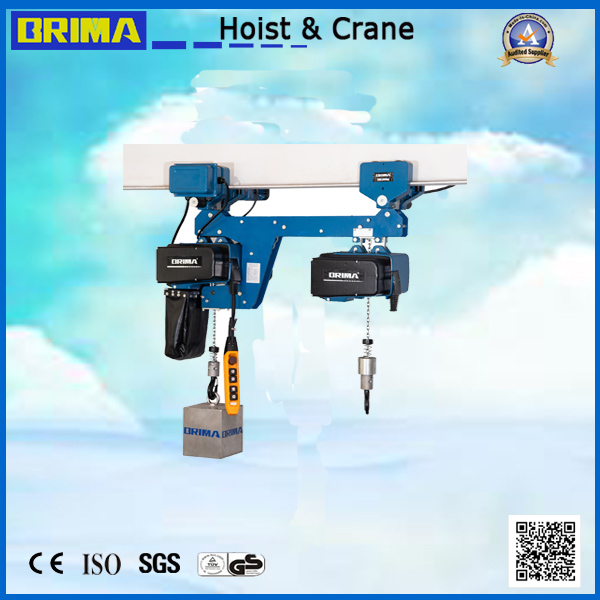
Beyond official duty ratings, daily operational realities on the factory floor significantly impact how long your equipment will survive.
The relationship between the load lifted and the machine maximum capacity is a primary driver of mechanical wear. Constantly lifting loads at the maximum rated capacity places severe thermal and mechanical stress on the motor, gearbox, and braking system. Conversely, utilizing a high-capacity unit to routinely lift lighter loads drastically reduces internal strain. This high safety margin keeps the motor cooler and significantly extends the operational lifespan of the asset.
Industrial environments are rarely pristine. External conditions rapidly accelerate component degradation. Extreme ambient temperatures cause electrical contactors to overheat and lubricants to break down. High humidity and corrosive airborne chemicals degrade metal housings and internal wiring. Furthermore, excessive dust found in foundries or cement plants acts like sandpaper. If abrasive particles bypass the seals, they will contaminate the gearbox and destroy moving parts.
Continuous operation generates substantial heat. If a system is used intermittently, the aluminum alloy housing has time to dissipate heat and cool the motor down between lifts. In contrast, pushing a system continuously beyond its rated duty cycle will overheat the motor. This leads to the rapid degradation of internal F-class insulation. Thermal overload remains one of the leading causes of premature failure in lifting machinery.
Even the most robust equipment cannot withstand poor operating practices. Common operator errors drastically reduce longevity. Side-pulling damages the chain guide and places unintended stress on the internal gearing. Shock loading by jerking the load suddenly multiplies the weight force, potentially fracturing the alloy steel load chain. Additionally, relying on emergency limit switches for standard operation quickly burns out these critical safety components.
Initial build quality dictates long-term durability. Precision-engineered gearboxes, high-grade steel components, and advanced motor cooling systems distinguish professional-grade equipment from generic alternatives. Investing in premium designs, such as a specialized 1000kg European double-hook electric chain hoist, provides superior structural integrity. These advanced units feature aviation-grade aluminum bodies for better cooling and dual braking systems, ensuring a demonstrably longer lifespan in demanding industrial environments.
It is a common misconception that the main housing unit and the lifting chain share the exact same lifespan. Experienced engineers know they must be evaluated and maintained as two separate entities.
The steel load chain is a consumable component. While the motor and gearbox remain protected inside a sealed housing, the chain bears the direct physical brunt of every lift. It faces constant exposure to the environment, friction, and dynamic tension. Consequently, the load chain will almost always require replacement before the core motor reaches the end of its Safe Working Period. Under heavy industrial use, a high-strength G80 load chain typically lasts between 3 to 5 years.
Operators and maintenance teams must monitor the chain for specific failure indicators. The most critical metric is elongation. This stretching occurs when the inner bearing surfaces of the chain links wear down due to friction. Other red flags include deep gouges from impact, severe rust that pits the metal, and stiff links that do not articulate smoothly as they pass through the chain guide.
Proactive maintenance is the most effective strategy for maximizing your return on investment. A well-maintained system operates safely and predictably for decades.
Preventative maintenance begins with the equipment operator on the floor. Before the first lift of a shift, a brief visual and functional inspection can prevent catastrophic failures.
Inspection Area | What to Check |
|---|---|
Controls | Test the pendant buttons and verify the emergency stop functions immediately. |
Load Chain | Visually check for twists, obvious gouges, or lack of lubrication. |
Hooks | Ensure the safety latch springs back and check the hook for stretching or twisting. |
Audio Check | Run the unit without a load and listen for abnormal grinding or clicking noises. |
Operating a dry chain is the single most common cause of premature chain and chain guide failure. Metal-on-metal friction rapidly degrades the links. The lifting chain must be regularly lubricated with a high-quality, manufacturer-recommended oil. Depending on usage, heavy-duty applications may require weekly lubrication, while lighter applications may only require monthly attention. Always ensure the chain is wiped clean of grit and debris before applying fresh lubricant.
To maintain compliance with occupational safety regulations, lifting machinery must undergo rigorous annual inspections. These must be performed by certified technicians. They will conduct dynamic load testing, open the housing to inspect internal gear wear, check brake pad thickness, and verify the integrity of all electrical contactors.
Despite excellent maintenance, all mechanical equipment eventually reaches the end of its usable life. Recognizing the warning signs prevents unexpected downtime and dangerous workplace accidents.
Does your machine require constant intervention from the maintenance department? If so, the internal components have likely surpassed their intended Safe Working Period. Frequent motor overheating usually indicates that the internal copper wiring insulation has degraded or the gearbox is generating excessive friction.
Workplace safety cannot be compromised. If you observe hairline cracks in the external housing, severe wear on the internal load sheaves, or a lower hook that has bent beyond allowable tolerances, the structural integrity of the unit is compromised. Structural metal fatigue is rarely repairable and necessitates immediate replacement.
A healthy system operates with a consistent, smooth mechanical hum. Unusual sounds indicate severe internal issues. Heavy grinding, sharp metallic clanking, or high-pitched squealing point to internal gearbox failure or bearing collapse. Rebuilding a severely damaged internal gearbox is often highly labor-intensive and cost-prohibitive.
Even if the machinery runs smoothly, technological obsolescence can force your hand. If your unit is several decades old, sourcing replacement parts becomes a logistical nightmare. Waiting weeks for custom-machined replacement parts results in unacceptable facility downtime. At this stage, upgrading to modern equipment is the most logical operational decision.
For facility managers and procurement officers, deciding whether to repair or replace an aging lifting system is a critical financial crossroad. Making the correct decision requires an objective analysis of current repair costs, operational downtime, and the technological advantages of modern solutions.
Repairing your equipment is generally the most logical and cost-effective choice when the core components remain structurally sound. Replacing a worn load chain, swapping out a damaged pendant control cable, or installing new brake friction discs are standard maintenance procedures. These repairs are relatively inexpensive and do not indicate that the core motor or gearbox is failing.
Industry professionals generally rely on the 50 percent rule. If the total cost of a repair exceeds half the price of a brand-new unit, replacement yields a better long-term return on investment. In addition, replacing an aging unit allows a facility to upgrade for enhanced safety and efficiency. Taking advantage of modern variable frequency drives and precision controls found in a contemporary European double-hook electric chain hoist transforms your operational capabilities.
Evaluation Criteria | Indicator to Repair | Indicator to Replace |
|---|---|---|
Component Affected | Pendant, chain, hooks, contactors | Motor, internal gearbox, main housing |
Cost of Service | Less than 30% of a new unit | Greater than 50% of a new unit |
Downtime Required | Minimal (Hours to a few days) | Extensive (Weeks waiting for custom parts) |
Equipment Age | Under 10 years (Parts readily available) | Over 15 years (Parts obsolete or discontinued) |
Safety Compliance | Passes annual load tests easily | Fails testing; structural cracks visible |
Selecting the correct equipment from the outset is the absolute best way to guarantee a 10 to 20-year lifespan. Procurement decisions must be based on empirical operational data rather than upfront cost alone.
Never purchase machinery based solely on its weight capacity. Buyers must accurately calculate their daily lifting hours, average load weights, and frequency of starts and stops. A unit rated for light duty will fail quickly if placed on a heavy-duty production line, even if the actual loads never exceed the maximum weight limit.
Modern lifting technology incorporates advanced mechanical and electronic safety features designed to protect the equipment from operator error. Mechanical friction overload clutches prevent the machine from lifting weights beyond its safe capacity. Thermal motor sensors automatically shut down the unit before heat damage occurs. Precision upper and lower limit switches prevent the load block from smashing into the housing.
The longevity of your equipment is directly tied to the support provided by its manufacturer. Partnering with trusted industry brands ensures that your lifting systems remain operational for their full intended lifespan. Reputable manufacturers provide comprehensive warranties, guarantee the long-term availability of spare parts, and offer robust technical support. This transforms a simple purchase into a reliable long-term industrial asset.
In conclusion, while the average lifespan of these systems spans one to two decades, daily industrial usage heavily impacts this expected timeline. Routine maintenance helps you prevent very costly sudden breakdowns. Treat your lifting equipment as a serious long-term investment rather than a disposable tool. Reliable machinery guarantees facility safety and a strong financial return. Ready to upgrade your facility with equipment engineered for maximum longevity? Explore high-performance 1000kg lifting solutions and partner with industry experts at Brima Hoist to match your exact duty cycle needs today.
Generally, no, unless the equipment has been specifically engineered and rated for outdoor environments. Standard indoor units typically feature an Ingress Protection rating of IP54 or lower. This is insufficient to block wind-blown rain, heavy dust, or snow. Exposure to outdoor weather will cause rapid oxidation of the steel load chain, moisture accumulation inside the electrical panel, and condensation within the motor housing. If outdoor use is mandatory, you must specify a unit with a minimum rating of IP55 or IP65 and equip it with a protective weather cover.
The frequency of lubrication is entirely dependent on your specific operating environment and the intensity of your duty cycle. For heavy-duty applications operating multiple shifts per day, weekly lubrication with a high-quality Extreme Pressure oil is often required. For lighter, intermittent use, a thorough monthly application is usually sufficient. It is critical to note that you should never apply new oil over dirty, grit-filled grease. The chain must be cleaned with an appropriate solvent to remove abrasive debris before fresh lubrication is applied.
Both systems are capable of lasting 10 to 20 years when properly maintained, but they are engineered for different mechanical realities. Wire rope systems are typically reserved for extreme capacities exceeding 10 tons and exceptionally high lifting speeds. However, wire ropes are susceptible to fraying and crushing on the drum. Chain-based systems are generally more durable and cost-effective for loads under 10 tons. The steel links are highly resistant to lateral wear and do not suffer from the same drum-crushing issues as wire ropes, making them exceptionally long-lasting in rugged industrial environments.
Yes, significantly. The lifespan of lifting machinery is calculated based on the assumption of lifting loads at its maximum rated capacity. By consistently lifting loads that are well below the maximum threshold, you dramatically reduce the mechanical strain on the gearbox, the tension on the load chain, and the thermal load on the motor. This practice allows the internal components to run cooler and experience far less microscopic metal fatigue, thereby extending the overall operational lifespan of the asset.
Calculating the duty cycle involves determining the maximum operating time per hour and the average load spectrum. You need to track how many starts and stops the motor makes per hour and the average weight of the loads compared to the maximum capacity. Consulting with a lifting equipment engineer is the best way to translate this operational data into a specific ISO or FEM classification to ensure you purchase the correct unit.
Thermal overload and lack of chain lubrication are the two leading causes of premature failure. Pushing a motor beyond its rated duty cycle melts the internal copper wiring insulation. Simultaneously, operating a dry chain causes severe metal-on-metal friction, rapidly wearing down the chain links and the internal load sheaves. Both of these issues are entirely preventable with proper equipment selection and routine maintenance.
