
Views: 0 Author: Site Editor Publish Time: 2026-09-30 Origin: Site


When massive steel coils, precast concrete panels, or multi-ton aerospace components need moving safely across a busy factory floor, standard lifting gear often falls short. Choosing the wrong hoist creates severe operational bottlenecks. It also introduces significant workplace safety hazards. Procuring the correct lifting equipment is a major capital investment. In this comprehensive guide, we explore exactly how this machinery operates. We will break down its critical internal components and provide a strategic buyer's guide. This approach will help you select the ideal configuration for your overhead crane system.
Heavy-Duty Performance: Engineered for high-capacity lifting, this equipment is the industry standard for handling loads ranging from 1 ton to over 100 tons.
Core Mechanics: The system operates via a powerful electric motor driving a grooved drum. This smoothly winds and unwinds a high-strength steel wire rope to manipulate loads.
Essential Components: The lifting motor, enclosed gearbox, wire rope drum, electromagnetic braking system, and limit switches work synchronously. They guarantee precise and safe load positioning.
Ideal Applications: These hoists serve as the primary lifting mechanism in heavy manufacturing facilities, steel mills, foundries, and large-scale overhead crane architectures.
Smart Selection: Choosing the right equipment requires calculating load capacity, required lift height, and duty cycle. It also demands strict compatibility with specific crane setups like single or double girder configurations.
The material handling sector is currently undergoing a massive transformation. Modern facilities face strict workplace safety regulations and unprecedented demands for higher throughput. Consequently, outdated manual systems are rapidly being phased out. The current industrial market demands motorized lifting equipment integrated with smart load monitoring and Variable Frequency Drives. These electronic additions reduce energy consumption and help maintenance teams predict wear before a breakdown occurs. In this evolving landscape, multi-strand steel cable systems offer the exact redundancy, rapid lifting speeds, and massive load capacities required to keep global supply chains moving smoothly.
Fundamentally, an electric wire rope hoist is a highly specialized piece of motorized lifting equipment designed for rigorous industrial environments. It utilizes a multi-strand steel wire rope, a motor-driven grooved drum, and a robust hook block to lift and suspend heavy loads safely. Unlike manual chain blocks that rely on human effort, these hoists harness three-phase electrical power to generate immense torque. Operators can maneuver massive weights with pinpoint accuracy.
In industrial material handling, these hoists are rarely deployed as standalone units. Instead, they function as the active lifting mechanism integrated into larger crane systems. Typically mounted on the bridge of overhead cranes, gantry cranes, or jib cranes, the hoist travels along the structural beams. This setup provides the necessary vertical lifting motion, while the crane framework facilitates horizontal movement across the expansive facility floor.
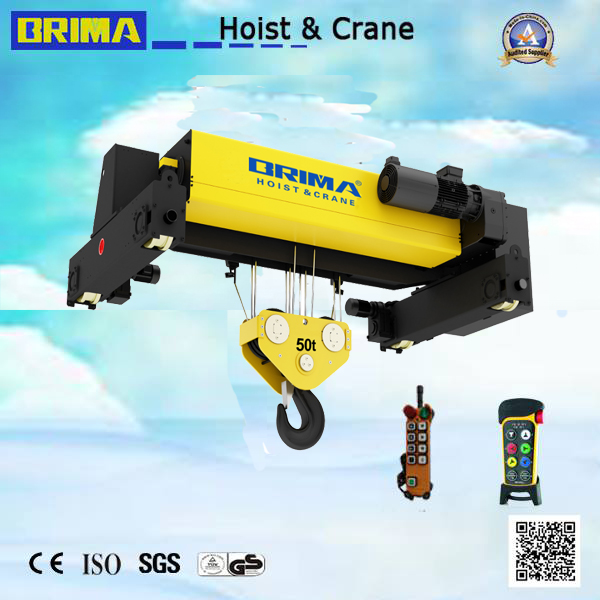
The operation of this equipment follows a highly precise cycle. When an operator presses the lift button on a suspended pendant or radio remote, the electrical contactors instantly snap shut. This sends a surge of power to the lifting motor. The motor activates to initiate the mechanical lifting process. The moment the operator releases the control, power is severed. This triggers the integrated fail-safe braking system to clamp down immediately, holding the suspended load securely in mid-air.
Industrial electric motors spin at incredibly high revolutions per minute. That raw speed must be converted into usable lifting power. The motor transfers its rotational energy directly into an enclosed gearbox acting as a speed reducer. The hardened gears inside step down the rotational speed while simultaneously multiplying the torque. This high-torque output is then channeled to the wire rope drum. It grants the hoist the mechanical advantage necessary to lift several tons of dead weight effortlessly.
As the gearbox turns the drum, the steel wire rope is manipulated to raise or lower the hook. The drum surface features precisely machined grooves. As the rope winds, it lays perfectly into these designated channels. This prevents the steel strands from overlapping, tangling, or jerking. Consequently, the load is lifted with absolute stability. It maintains a balanced center of gravity without dangerous swinging that could threaten nearby personnel or machinery.
The primary driver of the equipment is a heavy-duty electric motor. Industrial hoists generally utilize conical or cylindrical rotor motors specifically engineered for crane duty. Built with high insulation classes, these motors withstand the intense thermal buildup generated by the frequent starts, stops, and directional reversals typical of active manufacturing shifts.
Acting as the primary lifting medium, the galvanized or lubricated steel wire rope is constructed from multiple strands of wire twisted around a central core for maximum tensile strength. It wraps around a cylindrical steel drum. The deep grooves on this drum guide the rope evenly during operation. This significantly reduces friction, prevents the crushing of delicate wire strands, and ultimately extends the lifespan of the rigging.
The gearbox is a sealed, oil-lubricated component housing a series of precision-cut steel gears. Modern hoists frequently utilize helical gears. These provide a larger contact area between gear teeth compared to standard spur gears. This advanced design ensures power is transmitted smoothly. It results in whisper-quiet operation and drastically reduces mechanical wear over years of heavy use.
Safety is paramount in overhead lifting. These hoists rely on fail-safe electromagnetic brakes. During active lifting, electrical current keeps the brake pads disengaged. Should the facility experience a sudden blackout, the loss of current causes heavy-duty springs to instantly clamp the brake onto the motor shaft. This arrests all movement in a fraction of a second.
The hook block consists of a forged steel hook, internal sheaves, and heavy-duty thrust bearings. These bearings allow the suspended load to rotate smoothly for exact positioning. It is always equipped with a spring-loaded safety latch to prevent lifting slings from slipping out. Just above the drum, limit switches act as essential electronic safety guards. They automatically cut power to the motor if the hook is raised too high or lowered too far, preventing catastrophic structural damage.
Designed for everyday industrial applications, these units are mounted beneath a single crane beam. They typically feature a low-headroom design where the hoist body is positioned parallel to the beam rather than hanging directly below it. This compact architecture maximizes the available lifting height. It is highly effective for workshops and assembly plants with lower ceiling clearances.
For exceptionally heavy loads demanding maximum structural stability, facilities rely on double girder configurations. These robust units sit atop a trolley traveling across two parallel crane bridge beams rather than hanging below a single beam. This top-running architecture provides significantly higher hook clearance. Investing in a premium model like a European Double Girder Electric Wire Rope Hoist guarantees enterprise-level reliability. Taking a standard 5-ton European model as an example, these units typically feature a compact FEM 2m or 3m duty rating. They offer dual lifting speeds up to 5 and 0.8 meters per minute via inverter control. Coupled with IP55-rated enclosures, this ensures massive weights are maneuvered with minimal deflection and superior safety.
Unlike traveling hoists that move across a factory ceiling, foot-mounted models are strictly stationary. They are bolted directly to a solid surface like a concrete floor, a reinforced wall, or a fixed platform. In practice, these are utilized as heavy-duty winches to pull loads horizontally up an incline. They also act as fixed vertical lifting points in specialized automated manufacturing cells.
The global market generally categorizes hoists into traditional and European styles. Traditional models tend to be bulkier and heavier, relying on older brute-force motor designs. European-style hoists represent the pinnacle of modern engineering. They feature highly compact dimensions, lighter deadweights, and frequently incorporate Variable Frequency Drives. This electronic integration allows for stepless variable speed control. It results in superior energy efficiency and micro-speed load positioning.
In sectors such as automotive assembly, aerospace manufacturing, and heavy machinery production, components weigh several tons and require exact placement. Positioning an engine block onto a chassis with millimeter precision is a delicate task. Wire rope hoists provide the necessary combination of raw lifting power and smooth micro-speed positioning required to align these expensive components without causing impact damage.
Metal production facilities present some of the most punishing environments on earth. Hoists deployed here routinely handle ladles of molten metal, massive steel coils, and glowing steel forgings. To survive these extremes, the equipment is often customized with specialized heat shields, high-temperature wiring, and steel-core ropes designed to withstand intense radiant heat while sustaining continuous heavy-duty cycles.
In bustling logistics hubs handling oversized freight, standard forklifts simply cannot keep up. Overhead crane systems equipped with high-speed wire rope hoists streamline the loading and unloading of flatbed trucks and railcars. This overhead approach clears floor space, significantly reduces turnaround times, and improves overall warehouse throughput.
While towering crane structures handle the highest lifts on construction sites, heavy-duty wire rope hoists are essential in staging areas and prefabrication yards. Construction crews rely on them for lifting and maneuvering dense structural materials. This includes precast concrete panels, heavy steel beams, and large rebar cages before they are transported to the active building site.
The immediate differentiator between these two types of lifting equipment is their safe working load limit. Electric chain hoists are highly effective for lighter everyday lifting tasks, typically capping out around 5 tons. However, when an operation requires moving loads exceeding 5 tons, the wire rope hoist becomes the undisputed champion. Its multi-strand design distributes heavy weight much more effectively than individual chain links. It scales comfortably up to 100 tons or more.
Industrial environments demand equipment that can run continuously without overheating. Wire rope hoists are equipped with robust motors and advanced gearboxes designed to dissipate heat rapidly. This allows them to sustain higher duty cycles, making them ideal for continuous multi-shift manufacturing processes. Furthermore, wire rope configurations inherently support much faster lifting and lowering speeds. This optimizes cycle times in high-volume production lines.
Precision is non-negotiable when handling fragile components. Chain hoists operate using interlocking links that pass over a pocket wheel. This can create a slight bouncing movement known as the polygon effect, transferring micro-vibrations to the load. A wire rope hoist eliminates this issue entirely. The steel cable winds seamlessly into the machined grooves of a drum. It creates a highly stable, vibration-free lift mechanically superior for delicate positioning.
Feature | Electric Chain Hoist | Electric Wire Rope Hoist |
|---|---|---|
Optimal Capacity | Light to Medium: 0.5 to 5 Tons | Heavy-Duty: 5 to 100+ Tons |
Lifting Speed | Slower, consistent speeds | Faster, often with variable speed control |
Duty Cycle | Intermittent, moderate usage | Continuous, high-frequency usage |
Load Stability | Prone to slight micro-vibrations | Extremely smooth and stable |
Ideal Application | Workstations, small assembly lines | Steel mills, large manufacturing bays |
The foundational metric for any lifting equipment is its rated capacity. A strict engineering rule of thumb is to always select a hoist capacity that exceeds your heaviest expected load. If your maximum operational load is 4 tons, you should invest in a 5-ton system to provide a reliable margin of safety. This buffer accounts for dynamic loading during abrupt starts or stops and helps extend the overall lifespan of the motor.
Lift height refers to the maximum vertical distance the hook must travel from the floor to the highest required point. In a wire rope system, this height is directly constrained by the physical dimensions of the grooved drum. The drum must be large enough to store the entire length of the cable without overlapping. Assess your operational bottlenecks carefully. High-volume facilities benefit immensely from dual-speed hoists that move loads quickly across the room but set them down gently.
Your lifting equipment must integrate flawlessly with your existing or planned crane structure. Buildings with restricted vertical space benefit immensely from low-headroom single girder hoists. Conversely, operations moving massive tonnage require a top-running setup. Selecting the proper electric wire rope hoist for overhead cranes ensures dynamic weight distributes correctly across the bridge beams. This preserves the structural integrity of your entire building.
The physical environment dictates the required protective features and Ingress Protection ratings. Standard indoor manufacturing requires basic enclosures to protect against dust. However, outdoor equipment demands rigorous weatherproofing. This includes rain covers, anti-condensation motor heaters, and anti-corrosion coatings. For chemical plants or grain silos, specialized explosion-proof hoists are legally mandated to prevent stray sparks from igniting airborne particulates.
Safety begins long before the motor is turned on. Operators must be trained to conduct a standard pre-operation visual and functional inspection at the start of every shift. Key checkpoints include inspecting the steel cable for signs of fraying, crushing, or broken wires. The operator must also verify that the forged hook is not bent. They should ensure the safety latch springs back firmly and test the limit switches without a load to confirm they successfully stop the hoisting motion.
Friction is the ultimate enemy of mechanical longevity. The steel wire rope must be routinely treated with specialized penetrating grease. This lubricant seeps into the core, minimizing internal friction between the individual metal strands as they bend over the drum. It also forms a barrier against rust. Maintenance technicians must perform regular oil analysis on the gearbox to prevent gear grinding alongside inspecting the electromagnetic brake pads for wear.
Enterprise-level material handling must comply with established regulatory frameworks to protect the workforce and mitigate corporate liability. Depending on your geographic location, your hoisting equipment must adhere to stringent industrial standards. Maintaining compliance involves rigorous daily checks, mandatory annual load testing, and structural integrity certifications conducted by independent lifting engineers.
Motorized wire rope lifting equipment is an indispensable asset for heavy-duty material handling. It offers unmatched capacity, rapid lifting speeds, and exact load precision. By understanding its core internal components and adhering to strict maintenance schedules, facility managers can prevent costly equipment downtime and severe workplace hazards.
Matching the right hoist type to your specific operational environment guarantees a highly profitable, streamlined operation. Looking for a reliable, enterprise-grade lifting solution? Explore high-performance options like the Brima 5-Ton European Double Girder Electric Wire Rope Hoist for your overhead crane needs today. Ensure your industrial operations never stand still.
The lifespan of a wire rope depends heavily on operating hours, load frequency, and maintenance quality rather than strict calendar years. In a well-maintained facility with moderate usage, a high-quality galvanized steel rope can last for several years. Proper lubrication is the most critical factor in extending its life. However, safety protocols dictate that a rope must be retired and replaced immediately if inspections reveal signs of core protrusion, severe kinking, localized crushing, or a specific number of broken wires.
Yes, these systems can be deployed in outdoor environments such as shipping yards and construction sites, but they require specific environmental ratings. A standard indoor hoist will degrade rapidly if exposed to rain or high humidity. Outdoor models must be equipped with weatherproofing features including IP66-rated enclosed motor housings, protective rain covers for the drum, anti-condensation heaters, and specialized anti-corrosion coatings applied to both the wire rope and the external steel framework.
Reeving refers to the path the wire rope takes between the hoist drum and the hook block. In a single reeving setup, the rope drops from the drum, loops through the hook block, and anchors to a fixed point. As the drum turns, the hook tends to drift slightly laterally. Double reeving utilizes two ropes falling from opposite ends of a specially grooved drum. This design ensures the hook moves in a perfectly straight vertical line, which is crucial for precise, zero-drift load positioning.
A double girder design means the hoist trolley travels on top of two parallel bridge beams rather than hanging beneath a single beam. This architectural choice is made for two primary reasons: vertical clearance and structural stability. By sitting on top of the girders, the hoist drum and hook block are positioned higher, providing maximum lifting space within the building. Furthermore, the two beams distribute the load weight much more effectively, making double girder designs the mandatory standard for lifting exceptionally heavy loads.
Modern industrial hoists are engineered with stringent safety mechanisms to handle sudden power failures. They are equipped with fail-safe electromagnetic braking systems. Under normal operation, electrical power holds the brake open, allowing the motor to turn. The exact millisecond that electrical power is lost, the electromagnetic field collapses. High-tension springs instantly engage the brake pads against the motor shaft, securely clamping the mechanism and holding the suspended load safely in mid-air until power is restored.
Heavy-duty lifting requires significant electrical torque. Therefore, industrial hoists generally operate on three-phase power systems rather than standard single-phase residential power. Depending on your regional electrical grid, this typically means 380V, 415V, or 480V setups. Three-phase power ensures the lifting motor draws a consistent, stable current during heavy load spikes, preventing overheating and extending the lifespan of the internal electrical contactors.
Maintenance frequency depends entirely on the duty cycle and operating environment. However, a standard baseline exists for factory operations. Operators must perform visual checks daily before the first lift. Maintenance teams should conduct a thorough mechanical inspection every three months, checking gearbox oil levels and brake pad wear. Finally, independent safety regulators require a certified load test and structural inspection annually to maintain legal compliance.
