
Views: 0 Author: Site Editor Publish Time: 2026-09-30 Origin: Site


Are you constantly battling bottlenecks when moving massive 5000kg steel coils or heavy concrete precasts across your factory floor? Inefficient material handling does not just slow down production. It creates severe safety hazards. Fortunately, upgrading your overhead infrastructure with a high-capacity Electric Wire Rope Hoist eliminates these logistical nightmares. This system provides stable and reliable lifting power. In this guide, we dive into the core mechanics, practical benefits, and exact specifications you need to optimize daily workflow.
Unmatched Capacity: Engineered specifically for heavy industrial environments, efficiently managing massive weights of 5000kg and beyond without structural strain.
Superior Durability: The multi-strand steel cable design provides exceptionally high tensile strength and a significantly longer operational lifespan in harsh conditions compared to traditional chain alternatives.
Precision and Speed: Modern European-style designs offer stepless lifting, low headroom configurations, and highly precise load positioning for delicate operations.
Enhanced Safety: Integrated fail-safes, including electronic overload limiters and advanced dual-braking systems, drastically mitigate everyday workplace hazards.
High ROI: Reduced reactive maintenance requirements and increased operational uptime contribute to a highly favorable return on investment over the equipment lifecycle.
Understanding the fundamental mechanics of industrial lifting equipment is crucial for facility managers and procurement officers aiming to upgrade their material handling infrastructure. Rather than relying on physical labor or inadequate machinery, these systems utilize precise engineering to move substantial freight safely.
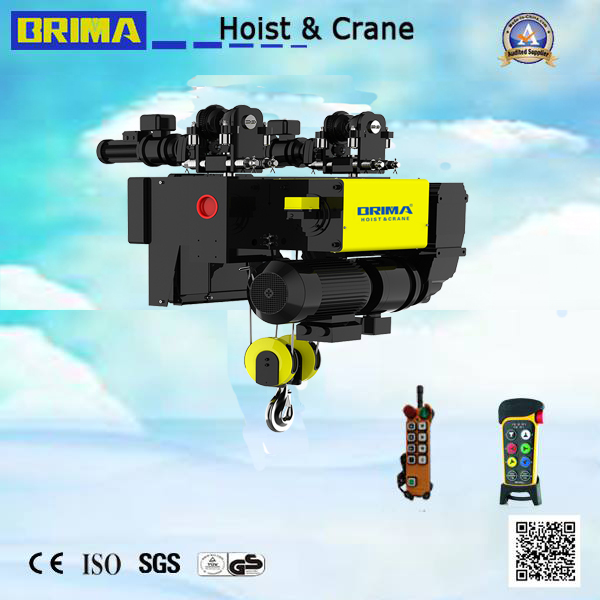
At its foundation, this equipment relies on a robust motorized system to raise, lower, and position dense materials. The primary components include a high-torque asynchronous electric motor, a heavy-duty planetary gearbox, a grooved cylindrical drum, high-tensile galvanized steel cable, and a reinforced lifting hook block. When the operator initiates a lift on the pendant or remote, the electric motor engages the gearbox. This subsequently rotates the grooved drum with massive torque.
As the drum turns, the steel cable is either smoothly wound into the precisely machined grooves to lift the load, or systematically unwound to lower it. This grooved design is not merely aesthetic. It is a critical engineering feature that ensures the cable spools evenly, preventing dangerous overlapping, tangling, or uneven friction wear. Meanwhile, the hook block attached to the end of the line is equipped with a spring-loaded safety latch to secure the payload securely during transit.
When outfitting a new facility, procurement teams frequently evaluate whether to invest in a cable-based system or a chain-based unit. While both ultimately serve the purpose of vertical lifting, their underlying structural differences dictate their ideal industrial applications.
Cable systems are universally recognized as the definitive choice for heavy loads. A multi-strand steel rope dissipates internal heat much more effectively during high-duty cycles than a solid, interconnected steel chain. Additionally, these systems offer noticeably smoother operation and faster lifting speeds. Imagine trying to align a massive 5-ton injection mold. The slight jerking motion of a chain passing over a sprocket could damage the tooling. A spooled cable eliminates this polygon effect, ensuring the smooth positioning essential for maintaining throughput.
Feature | Wire Rope Hoist | Chain Hoist |
|---|---|---|
Load Capacity | Ideal for heavy loads above 3000kg up to 80 tons. | Best suited for lighter loads under 3000kg. |
Lifting Speed | High-speed capabilities with smooth acceleration. | Generally slower, prone to slight mechanical jerking. |
Heat Dissipation | Excellent heat dissipation for high-duty cycles. | Retains heat, limiting continuous operational time. |
Application | Heavy manufacturing, foundries, large logistics hubs. | Small workshops, localized workstation lifting. |
Modern manufacturing and global logistics sectors operate on incredibly strict schedules where unexpected equipment failure leads to catastrophic financial losses. Therefore, integrating robust lifting technology is far more than a mere operational convenience. It is an absolute necessity for survival in a competitive market.
Recent industry data highlights a massive shift toward automated, continuous-duty lifting systems. As global supply chains tighten, plant managers can no longer afford the downtime associated with manual or light-duty equipment. The trend is clear. Facilities are rapidly transitioning to low-headroom, variable-frequency drive configurations. This evolution directly answers the growing demand for higher throughput without expanding the physical footprint of the building. Consequently, high-capacity lifting units have transitioned from being optional upgrades to critical infrastructural investments for any forward-looking enterprise.
Manual labor and smaller units simply cannot safely manage massive capacities. Attempting to move a 5000kg steel coil without specialized overhead equipment introduces severe safety risks. These advanced systems are engineered with exceptionally high safety factors. Their theoretical breaking strength significantly exceeds their rated working load limit. This uncompromising structural integrity allows industrial facilities to move massive tonnage daily without ever compromising the safety of the personnel operating on the floor.
Allocating capital for heavy-duty lifting machinery requires a clear, empirical understanding of the operational advantages it provides. The following benefits illustrate exactly why this specific technology remains the gold standard across heavy industry.
Specifically, time is arguably the most critical metric in industrial production. High-performance electric motors paired with spooling cables allow for significantly faster lifting and lowering speeds compared to chain alternatives. Crucially, this rapid speed does not come at the cost of load stability. For facilities that require continuous, repetitive lifting cycles, utilizing an Electric Wire Rope Hoist drastically reduces cycle times and permanently eliminates workflow bottlenecks.
Furthermore, the environments in which these machines operate are typically unforgiving. They are characterized by airborne dust, extreme temperature fluctuations, and continuous mechanical stress. The lifting medium is inherently resilient against abrasive wear and corrosive elements. Unlike a chain where the microscopic fracture of a single link can result in a catastrophic payload drop, a cable is composed of dozens of independent steel strands. If one individual outer wire snaps, the remaining core strands continue to support the weight, providing a vital margin of safety.
Safety remains the paramount concern in heavy material handling. Modern configurations are equipped with a comprehensive suite of advanced safety features. Dual braking systems ensure that the load remains securely suspended even in the event of a sudden facility power failure. In addition, built-in electronic overload protection systems actively monitor the payload weight. If a load exceeds the rated capacity, the system instantly prevents the motor from lifting, thereby mitigating the risk of structural collapse.
Procuring heavy-duty lifting machinery requires a rigorous technical evaluation rather than a simple price comparison. Engineers and buyers must carefully analyze specific operational metrics to ensure the selected unit meets current demands while accommodating future facility scaling.
The fundamental starting point for any procurement process is determining the maximum safe working load and the required vertical travel distance. It is an engineering best practice to select a unit with a capacity that exceeds your average load by at least twenty percent. For mid-to-large scale manufacturing, integrating a versatile Electric Wire Rope Hoist engineered for 5000kg loads with a 6-meter lift serves as an excellent benchmark. This specific configuration accommodates the vast majority of heavy tooling and raw materials without requiring oversized architectural supports.
The structural layout of your existing overhead crane directly dictates the type of unit required. Single girder units are suspended beneath the crane bridge. They are highly cost-effective, structurally lighter, and represent the standard choice for loads up to ten tons. Conversely, double girder units run on top of two parallel bridge beams and are generally reserved for ultra-heavy lifting exceeding twenty tons, or highly specialized applications where maximizing hook height is absolutely critical.
In recent years, the global material handling industry has seen a decisive shift toward European-style engineering designs. These modern units prioritize spatial efficiency, energy conservation, and operational precision over the bulky, outdated designs of traditional older-generation machinery.
One of the most significant engineering achievements of the European design is the low headroom configuration. In traditional models, the motor, gearbox, and drum are aligned linearly, consuming a substantial amount of vertical space. In contrast, European models utilize a highly compact C-shape layout, folding the components alongside the crane girder. This minimizes the vertical distance from the bottom of the beam to the lifting hook, allowing facilities to achieve a higher lifting height without the massive architectural expense of physically raising the building roof.
Modern European units are heavily integrated with advanced electronics, most notably Variable Frequency Drives. Traditional contactor-controlled units operate at fixed speeds, causing sudden mechanical jerks during startup. VFD technology allows for stepless speed regulation. Operators can utilize micro-speed positioning to gently lower a delicate 5-ton mold into a precise machine slot, then smoothly accelerate for rapid transit across the facility. This drastically reduces energy consumption and mechanical wear on the gearbox.
Even the most robust lifting equipment requires a systematic, predictive maintenance protocol. Implementing a strict maintenance schedule based on manufacturer guidelines prevents catastrophic failures and ensures a long-term return on your capital investment.
Visual inspections must be conducted daily by the operator before the first lift, followed by comprehensive monthly inspections by certified maintenance personnel. The primary focus should be the integrity of the steel cable. Inspectors must actively look for broken wires, severe kinking, or bird-caging. Bird-caging is a structural deformation where the outer strands open up and separate from the core. If any of these conditions are met, the cable must be retired immediately.
Steel cables are not static components. They are complex mechanical machines consisting of dozens of moving wires. As the cable bends over the grooved drum, internal friction occurs. Applying the correct industrial penetrating lithium-based grease reduces this internal abrasive friction. It provides a vital protective barrier against moisture, corrosive chemicals, and rust, significantly extending the operational life of the equipment.
Investing in a modern overhead lifting system fundamentally transforms workplace safety and operational efficiency. By handling dense materials with pinpoint precision, this advanced equipment significantly reduces operational downtime while simultaneously lowering long-term maintenance costs. European designs offer unmatched durability and spatial optimization for your daily operations. Stop letting outdated lifting equipment dictate your production speed. Upgrade your facility with a high-capacity Electric Wire Rope Hoist to ensure maximum productivity today. Explore the exact specifications on the Brima Hoist platform and find the perfect configuration to match your heavy-duty demands.
These units are structurally superior for handling heavy payloads, particularly those exceeding 5 tons. The cables distribute the weight across multiple interconnected steel strands, providing higher tensile strength and a much greater safety margin against sudden failure compared to the single-point links of a chain. Furthermore, they utilize grooved drums that allow for faster lifting speeds, smoother operation, and vastly superior heat dissipation, making them the only viable choice for high-duty cycle industrial environments.
Yes, absolutely. A properly engineered single girder unit is specifically designed to handle loads of 5000kg with maximum safety. The frame is mathematically calculated to distribute the 5-ton weight evenly across the bottom flange of the single bridge beam. This configuration is standard in global manufacturing, offering a perfect balance between heavy-duty lifting capacity, structural cost-efficiency, and spatial optimization on the factory floor.
The lifespan of the cable is highly variable and depends entirely on the duty cycle, the operating environment, and the strictness of the maintenance routine. Under standard operating conditions with proper regular lubrication to minimize internal bending fatigue, a high-quality galvanized cable can reliably last three to five years. However, harsh environments with acidic fumes or abrasive dust will significantly accelerate wear.
Low headroom refers to a specialized architectural geometry within the unit design. Instead of stacking the motor, drum, and hook vertically, engineers position these components in a parallel or C-shaped layout alongside the crane girder. This minimizes the vertical distance between the ceiling and the lifting hook, allowing you to lift loads higher up toward the ceiling and maximize vertical storage space without altering the physical structure of the building.
A modern compliant unit must integrate multiple layers of redundant safety mechanisms. Essential features include an electronic weight overload limiter that instantly cuts power if the load exceeds the rated capacity, preventing structural collapse. It must also feature upper and lower travel limit switches to prevent the hook block from crashing into the drum, along with phase sequence protection, emergency stop buttons, and a fail-safe electromagnetic braking system that automatically engages during power loss.
For a standard 5000kg capacity European-style unit, the lifting speed typically ranges from 5 to 8 meters per minute. Many modern units utilize variable dual-speed motors or variable frequency drives, allowing operators to switch between a rapid transit speed for efficiency and a micro-speed for precise, delicate load positioning.
A Variable Frequency Drive allows for stepless speed regulation rather than abrupt, fixed-speed movements. This eliminates the mechanical shock and load sway associated with starting and stopping. By ramping up the motor speed smoothly, a VFD significantly reduces wear on the planetary gearbox and the steel cable, extending the overall lifespan of the equipment while giving the operator pinpoint control over heavy payloads.
