
Views: 0 Author: Site Editor Publish Time: 2026-09-30 Origin: Site


Did you know the wrong hoist causes costly downtime? Mismatched equipment creates severe safety hazards on the shop floor. It damages fragile components. It quietly drains your maintenance budget. Are you currently choosing between chain and wire rope systems? Understanding their fundamental mechanical differences is the absolute first step toward optimizing your facility's productivity.
In this engineering guide, we break down the technical distinctions, cost implications, and ideal application scenarios for both setups. Ultimately, we help you select the exact lifting solution that delivers a secure, long-term return on investment.
Before signing off on a major capital investment in material handling, you must understand the mechanical architecture of these two primary systems. Both lift and lower heavy loads. Yet, their internal mechanics dictate entirely different operating environments.
An electric chain hoist relies on a simple but highly effective mechanism. An internal electric motor drives a specialized load sheave. As this motor turns, the pockets of the sprocket engage individual metal chain links. The system pulls the chain upwards into a collection bag or feeds it downwards.
Because of this straightforward design, chain hoists are inherently compact. They are highly portable and quick to install. Picture a mechanic pulling an engine block or an operator at a localized packaging station. In these light-to-medium duty scenarios where loads fall under the 5-ton threshold, a chain hoist serves as the standard choice.
A wire rope system utilizes a much more robust mechanical design. Instead of a chain and sprocket, it deploys a multi-strand steel cable. This cable winds smoothly around a precision-grooved cylindrical drum. A specialized rope guide ensures the wire lays perfectly into the grooves. This prevents tangling, overlapping, and premature wear.
This advanced construction makes the European Electric Wire Rope Hoist the undisputed champion of heavy industrial lifting. Built for severe duty cycles and massive capacities, these units provide continuous performance in demanding manufacturing environments. We frequently specify these for moving massive steel coils or positioning heavy aerospace components.
Selecting material handling equipment based solely on the initial purchase price is a massive procurement error. Buying a hoist that fails to match your operational reality leads to severe consequences.
Safety Risks: Safety remains paramount on any factory floor. Pushing a chain hoist beyond its safe working limits causes metal fatigue. The chain links can snap without warning. Conversely, deploying a wire rope hoist in an environment with extreme angular pulling causes the rope to jump the drum grooves. This leads to fraying, dropped loads, and severe workplace hazards.
Operational Downtime: The hidden costs of halting production lines are staggering. Light-duty chain hoists are simply not designed for continuous, back-to-back lifting. Deployed on a high-frequency assembly line, their motors overheat rapidly. This triggers thermal overloads, forcing your entire production to a grinding halt while the equipment cools.
Financial Waste: Financial leaks occur at both ends of the spectrum. Over-specifying wastes valuable capital and headroom space. Under-specifying guarantees premature motor burnout, constant part replacements, and a terrible long-term return.
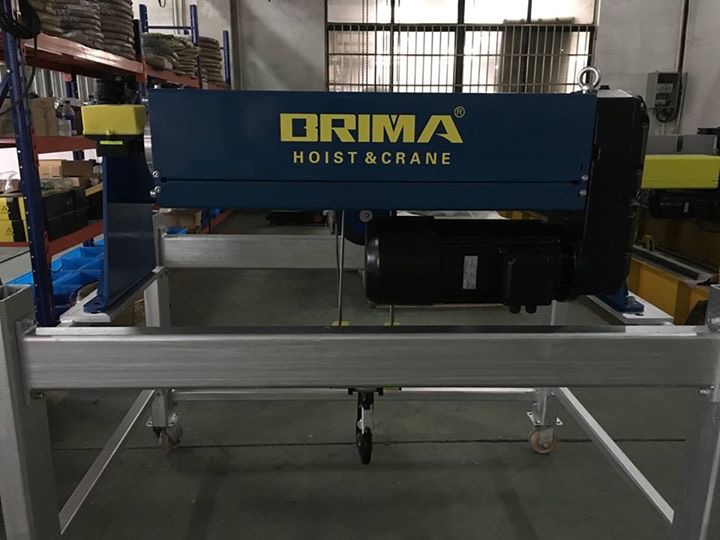
To make an informed decision, facility managers must evaluate the core technical differences. Below is a comprehensive breakdown of how these systems compare across critical performance metrics.
Feature | Electric Chain Hoist | Electric Wire Rope Hoist |
|---|---|---|
Ideal Capacity | Under 5 Tons | 5 to 50+ Tons |
Lifting Speed | Slower, potential for slight bounce | Fast, ultra-smooth, high precision |
Duty Cycle | Light to Medium, requires cooling | Heavy to Severe, continuous 24/7 operation |
Initial Cost | Lower upfront investment | Higher upfront, better long-term ROI |
Maintenance | Chain lubrication, sprocket checks | Wire inspection, groove checks, gearbox oil |
The most immediate dividing line is their safe working load limit. Electric chain hoists are highly efficient, but their mechanical design limits practical capacity. As chain size increases to handle heavier loads, the hoist becomes excessively bulky and economically unviable. They perform best for standard lifts up to 5 tons.
The wire rope design distributes weight across multiple steel strands and a massive steel drum. This allows them to handle immense weights effortlessly. For applications requiring 10 to 50 tons or more, the wire rope system offers unmatched structural integrity.
Speed and precision dictate factory throughput. Chain hoists often exhibit a phenomenon known as the polygon effect. Because individual chain links pass over a sprocket, a microscopic bounce occurs during the lift. This vibration is highly detrimental when handling fragile components.
Wire rope drum systems eliminate this bounce entirely. The smooth winding allows for significantly faster lifting speeds and pinpoint load positioning. When lowering a heavy mold into a machine with millimeter precision, ultra-smooth operation is mandatory.
Hoist durability relies on duty classifications set by global engineering organizations. Chain hoists typically fall into lighter duty classes. They require mandatory cooling periods between lifts to prevent motor damage.
Specifically engineered for endurance, wire rope hoists feature superior heat dissipation and robust gearboxes. They achieve severe continuous duty ratings and operate around the clock without faltering.
Historically, wire rope hoists were considered bulky. Modern engineering completely changed this dynamic. Advanced European-style designs mount the motor parallel to the drum utilizing a C-shape frame. These hoists sit higher up on the crane girder, reclaiming wasted vertical lifting space inside a warehouse.
Streamline your procurement process by evaluating your facility's specific needs against these critical operational factors.
Calculate the absolute maximum weight you will need to lift. Factor in the weight of below-the-hook attachments like spreader beams or lifting magnets. The general industry rule is clear. If your maximum load consistently exceeds 5 tons, transitioning to an Advanced Technology Wire Rope Hoist is the safest choice.
Evaluate how often the hoist will run. Occasional lifts strongly favor the economical chain hoist. Conversely, three-shift production lines demand the thermal capacity and sheer durability of a wire rope system.
Assess your operating environment closely. Chain hoists are easier to seal against dust and moisture. However, wire rope systems offer heavy customization. Galvanized ropes, specialized drum covers, and heavy-duty motor enclosures protect the equipment in brutal environments like steel mills.
Measure the distance from your floor to the lowest ceiling obstruction. If vertical space is limited, prioritize equipment designed to maximize lift height. Advanced low-headroom designs solve tight clearance issues without requiring structural building modifications.
Do not look solely at the sticker price. Chain hoists boast a lower initial upfront cost but fail rapidly if overworked. For heavy industrial applications, a wire rope system delivers a vastly superior long-term cost of ownership due to fewer breakdowns.
Consider your facility's maintenance capabilities. Chain hoists require regular chain lubrication and sprocket wear checks. Wire rope systems require careful inspection for broken wire strands and proper rope tensioning based on strict discard criteria.
When evaluating heavy-duty material handling equipment, engineering principles play a critical role in safety and efficiency.
The primary reason heavy manufacturing sectors gravitate toward wire rope systems lies in structural redundancy. A standard lifting chain consists of individual metal loops. If a single link experiences a catastrophic failure due to overloading, the entire chain breaks. The load drops instantly.
A wire rope is manufactured by twisting multiple individual steel wires into strands helically wound around a central core. If several wires break due to abrasion, the remaining wires continue to support the load. This redundancy provides maintenance teams with a visible warning during routine inspections long before a complete failure occurs.
Current material handling trends show a massive industry-wide shift toward energy efficiency, smart automation, and enhanced load control. Facility managers are rapidly moving away from legacy contactor-controlled equipment. Instead, they favor intelligent lifting solutions that protect both the load and the crane structure.
Modern engineering optimizes these systems for unprecedented safety. For example, investing in a state-of-the-art 5t Single Girder Wire Rope Hoist ensures your operations meet the highest global standards. These units feature Variable Frequency Drives on traveling motors offering stepless speeds from 2 to 20 meters per minute. They also provide dual-speed hoisting at 0.8 and 5.0 meters per minute. This inverter technology eliminates aggressive jerking, extends the lifespan of mechanical components, and significantly reduces energy consumption.
Selecting the right hoist is rarely a one-size-fits-all decision. The optimal choice depends heavily on specific environmental conditions.
Winner: Wire Rope Hoist
Steel mills and heavy equipment manufacturers deal with massive, bulky loads requiring continuous movement. These environments demand high capacity and extreme durability. The robust gearbox and motor cooling systems of wire rope units are absolutely mandatory here to prevent constant equipment failure.
Winner: Electric Chain Hoist
For localized workstations or packaging lines where loads rarely exceed 2 tons, the chain hoist wins. It is cost-effective and incredibly easy to install on lightweight jib cranes. It provides plenty of power for intermittent tasks where extreme precision is not the primary concern.
Winner: Wire Rope Hoist
When lowering a multi-ton sand mold in a foundry, there is zero margin for error. These applications require true vertical lift. The hook must travel perfectly straight up and down without horizontal sway. High-quality wire rope hoists equipped with double-grooved drums provide this exact precision.
Understanding the post-purchase requirements of your equipment is vital for calculating the true total cost of ownership.
Chain hoist maintenance is generally straightforward. Technicians must ensure the chain is continuously lubricated to prevent the metal links from grinding against the sprocket. They must also monitor the chain gauge for stretching and regularly clean the chain container to prevent jams.
Wire rope maintenance is slightly more specialized but highly predictable. Maintenance personnel must regularly inspect the wire rope for signs of crushing, kinking, or broken strands based on standardized discard criteria. It is critical to check the drum grooves and the rope guide mechanism for wear.
The overall lifespan of wire rope units in heavy-duty applications far exceeds that of chain hoists. The distribution of mechanical stress across a large grooved drum results in less concentrated wear. A well-maintained single girder electric wire rope hoist operating within its designated duty class like FEM 2m or 3m will reliably serve a heavy industrial facility for decades.
Choosing the right lifting equipment dictates your operational success, safety compliance, and long-term profitability. Carefully assess your load capacity, duty cycle, and facility environment to avoid the costly pitfalls of mismatched equipment. Electric chain hoists handle standard, intermittent loads under five tons highly effectively. However, the electric wire rope hoist remains the mandatory choice for heavy industry. It manages massive loads, continuous operations, and high-precision tasks with effortless reliability. Ready to upgrade your facility's infrastructure? Explore our full range of professional lifting solutions at Brima Hoist to find the exact equipment that matches your heavy-duty demands today.
Generally, no. Specialized high-capacity chain hoists exist for niche applications, but they become impractically large and mechanically inefficient at higher tonnages. For standard industrial applications, chain hoists cap around 5 to 10 tons. Beyond this threshold, wire rope systems become the standard, easily handling loads from 10 tons up to 100 tons due to superior load distribution.
For light-duty, intermittent operations, chain hoists are easier and cheaper to maintain because they have fewer moving parts. However, forcing a chain hoist to perform heavy, continuous lifts causes rapid wear. In heavy-duty scenarios, a properly specified wire rope system ultimately requires less frequent major part replacements, making it the more durable choice.
True vertical lift refers to the ability of the hoist hook to travel in a perfectly straight vertical line during the entire lifting and lowering process without horizontal shifting. High-quality systems achieve this by using a drum with right-hand and left-hand grooves. This allows the rope to wind from both ends toward the center simultaneously. This feature is critical in industries like aerospace assembly where a slight horizontal swing could damage expensive tooling.
Yes, the initial capital investment for a wire rope system is notably higher than a chain hoist of similar capacity. This price difference reflects the complex engineering required to manufacture precision-grooved drums, advanced rope guides, and multi-strand steel ropes. However, for heavy lifting, the superior longevity and operational efficiency deliver a much higher long-term return on investment.
With proper maintenance and adherence to designated duty cycles, a high-quality industrial wire rope hoist can easily last 15 to 20 years or more. Routine replacement of wear parts like the wire rope, rope guide, and brake pads ensures the core motor and gearbox continue performing reliably over decades of heavy use.
Yes, upgrading an existing overhead crane from a chain hoist to a wire rope hoist is a common facility upgrade. As long as the existing bridge crane girder can support the dimensional footprint and weight of the new wire rope unit, engineers can retrofit the system. This upgrade instantly improves lifting speed, precision, and continuous duty capabilities.
